
1
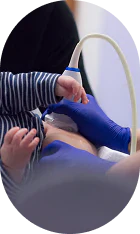
Consultant orthopaedic examination
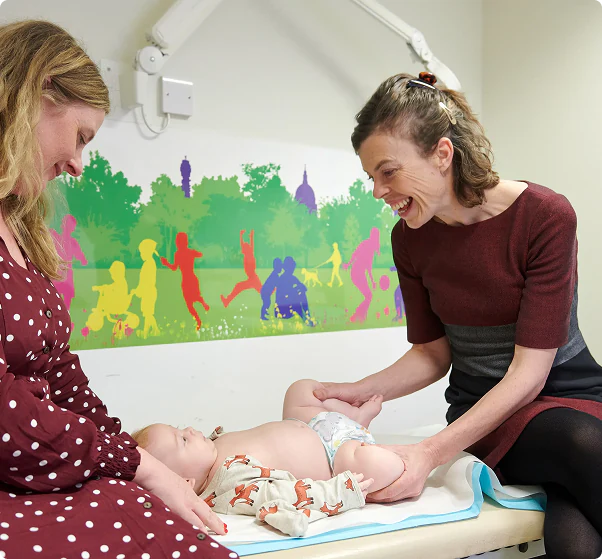
Full assessment of hip stability, range of movement, and symmetry using Ortolani and Barlow assessment where indicated
A private baby hip scan at LIPS Healthcare gives your newborn or infant a complete orthopaedic assessment, Graf ultrasound, and same-day diagnosis in a single appointment. No referral, no waiting list. Our One-Stop Baby Hip Clinic at Battersea Power Station is the only private clinic in South London combining all three, for babies from birth to six months.

A private baby hip scan at LIPS Healthcare gives your newborn or infant a complete orthopaedic assessment, Graf ultrasound, and same-day diagnosis in a single appointment. No referral, no waiting list. Our One-Stop Baby Hip Clinic at Battersea Power Station is the only private clinic in South London combining all three, for babies from birth to six months.
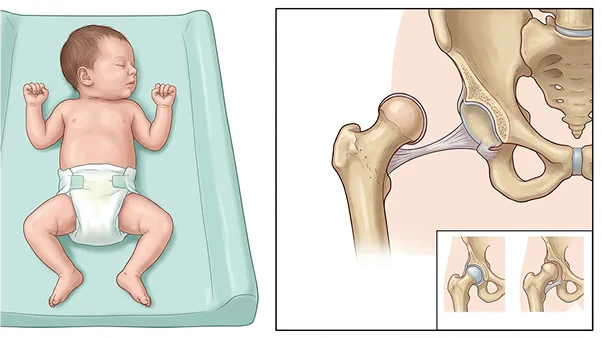
Your baby should be assessed if they have any recognised DDH risk factor, or if a concern was raised at their routine newborn check.
Breech presentation:
At or after 36 weeks, the most common reason parents are referred for a hip scan, regardless of delivery method
Family history of DDH:
Particularly in a parent or sibling
Female sex:
Girls are four to five times more likely to develop DDH than boys
First-born baby:
The less-stretched uterus limits hip movement during the third trimester
Low amniotic fluid:
Limits the baby's ability to position the hips normally in the womb
Clicky or unstable hips at the newborn check:
A clicking or clunking sensation during the Ortolani or Barlow test means the hip joint is loose and needs ultrasound assessment. A clicky hip is not something to wait and see.
The UK NIPE programme recommends hip ultrasound between four and six weeks of age for babies with these risk factors. If your baby has been referred and your NHS appointment is more than two weeks away, LIPS Healthcare can see your baby within 24 to 48 hours.
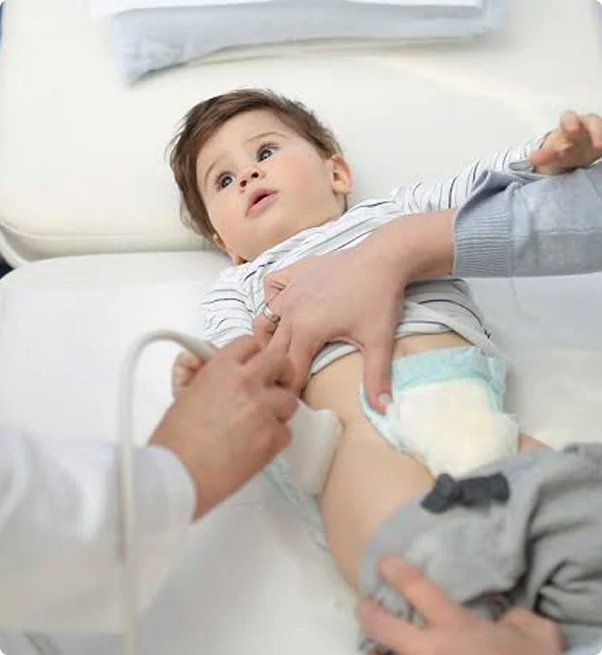
Most pathways separate the clinical examination, the ultrasound scan, and the results into three different appointments. At LIPS Healthcare, all three happen in one visit, on the same day, with the same clinical team. For families in Clapham, Vauxhall, Nine Elms, and across South London, this means one journey, one day, and a clear answer before you leave. Your appointment includes:
1
Full assessment of hip stability, range of movement, and symmetry using Ortolani and Barlow assessment where indicated
2
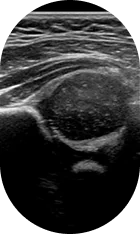
Performed immediately with real-time image review and alpha and beta angle measurement
3
Your consultant explains the findings in plain terms before you leave
4
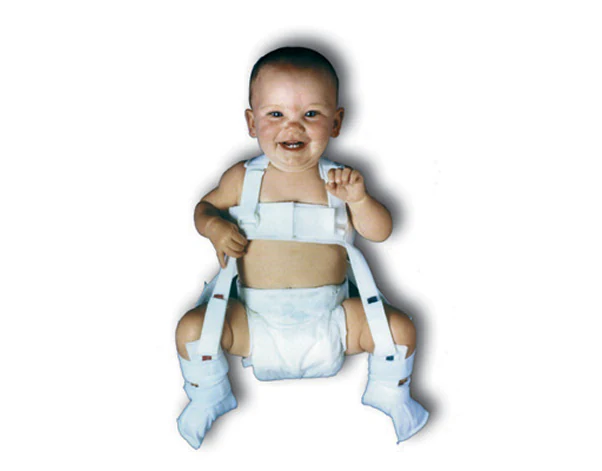
Monitoring, Pavlik harness referral, or further investigation, confirmed on the day
5
Sent securely the same day, for use with your GP, health visitor, or any NHS team involved in your baby's care
No referral required. The clinic covers babies from birth to six months of age.
One appointment. One journey. Clear answers on the day.

Signs include asymmetry in the thigh or buttock skin folds, one leg appearing shorter, limited hip movement during nappy changes, or a clicking sensation at the newborn check. Many babies with DDH show no visible signs at all, which is why ultrasound is the only reliable way to confirm DDH early.
Between four and eight weeks is the optimal window for a baby hip scan. Baby hips are fully developed by approximately four years of age, with the fastest socket growth occurring in the first six months of life. Detecting DDH during this window means the most effective treatment is still available. LIPS Healthcare sees babies from birth to six months. Do not wait beyond six weeks if you have been referred.
Yes. Girls are four to five times more likely to develop DDH than boys, related to the hormone relaxin, which increases ligament laxity in female infants at birth. Female sex alone is sufficient grounds for a hip ultrasound referral under the UK NIPE programme.
Some mild instability at birth resolves within four to six weeks. True DDH confirmed on Graf ultrasound does not resolve without treatment. Early Pavlik harness treatment in the first six months is highly effective and avoids surgery in most cases. Waiting without a confirmed assessment is not clinically appropriate.
Most look completely normal. Some may have asymmetric skin folds on the inner thighs or buttocks, or one leg may appear slightly shorter during nappy changes. These signs are not always present. Graf method ultrasound at four to eight weeks is the diagnostic standard, not visual observation alone.
Carry your baby in the M-position, with legs spread apart and knees higher than the bottom, to support normal socket development. Avoid tight swaddling that holds the legs straight and together. If your baby has any risk factor for DDH, an early ultrasound assessment is the most important step available.
No. LIPS Healthcare accepts direct bookings without a referral from a GP, midwife, or health visitor. Appointments are typically available within 24 to 48 hours. Your consultant writes to your GP and health visitor after the appointment with a full summary of findings and any recommended management plan.

