No. A 2025 review of 40 trials found soy isoflavones did not raise circulating oestradiol in postmenopausal women. Soy is not a plant form of HRT.
- Home
- About LIPS Healthcare
- Health Blogs
- Soy For Menopause
Soy For Menopause: What The Evidence Says About Isoflavones, Symptoms and Safety

Ms Monica Durigon
13, November 2026
Soy for menopause is worth including as part of a varied diet, but it is not a natural form of HRT and it does not simply replace the oestrogen that falls during menopause. Soy foods contain plant compounds called phytoestrogens, which interact gently with oestrogen receptors in a way that is much weaker and more selective than the body’s own oestrogen. This guide explains what phytoestrogens actually do, whether soy helps menopausal symptoms, bones and heart health, and whether it is safe for your breasts.
At a glance
- Soy is not plant HRT and does not raise your oestrogen levels.
- The evidence for soy easing hot flushes is mixed and modest at best.
- Moderate soy-food intake is not linked to higher breast-cancer risk.
TABLE OF CONTENTS:
Is soy good for menopause?
Soy for menopause can be a useful part of your diet, but it is not a treatment for menopausal symptoms and the benefits are modest. Some women actively avoid soy because they have heard it contains “oestrogen”, while others take concentrated isoflavone supplements hoping to replace declining hormones. Neither view is quite accurate.
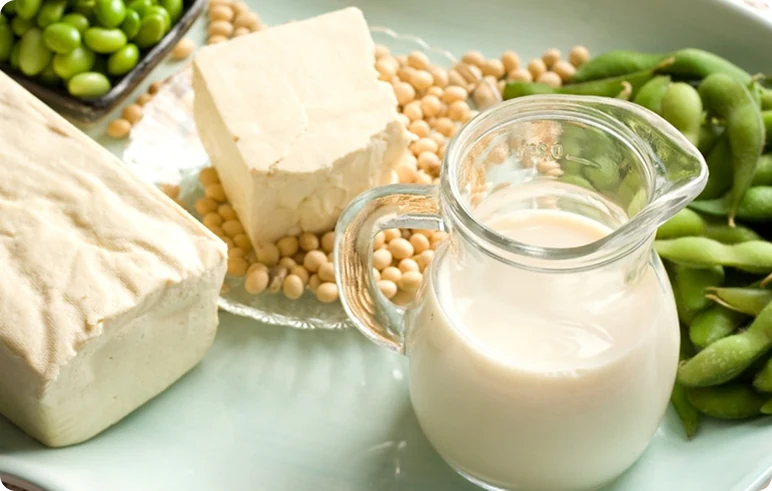
Soy and several other plant foods contain phytoestrogens. These can interact with oestrogen receptors in the body, but they are not human oestrogen and they do not behave like the hormones used in HRT. The science is more interesting, and more reassuring, than the “soy equals oestrogen” headline suggests.
What are phytoestrogens, and why soy is not plant HRT
Phytoestrogens are naturally occurring plant compounds whose chemical structure lets them interact with oestrogen receptors, but their effect is far weaker than the body’s own oestrogen. The main groups are isoflavones, found mostly in soya foods, lignans, found in flaxseeds, seeds and whole grains, and coumestans, found in smaller amounts in foods such as some sprouts and legumes.
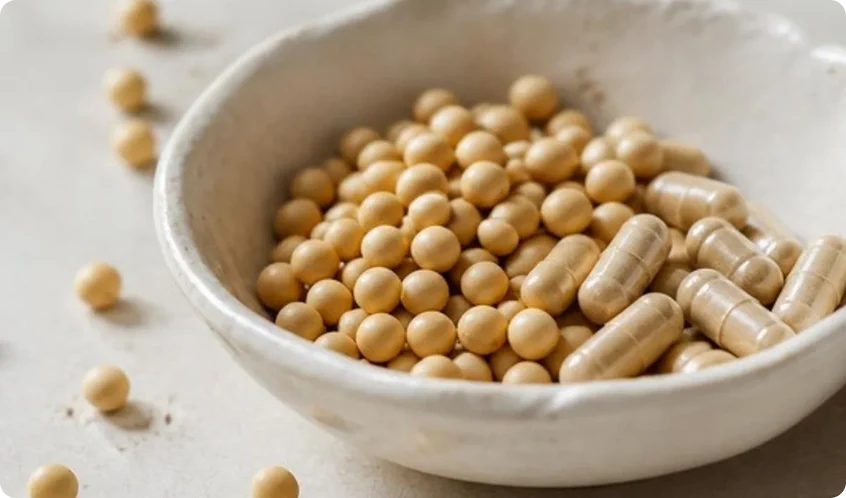
The main isoflavones in soy are genistein and daidzein. Because their structure resembles oestradiol, they can bind to oestrogen receptors, but they act more selectively and interact differently with the two main receptor types, ER-alpha and ER-beta. That selectivity is why calling them simply “plant oestrogen” is misleading.
A 2025 systematic review and meta-analysis of 40 randomised controlled trials involving 3,285 postmenopausal women looked at whether soy isoflavones produced measurable oestrogen-like effects on markers including circulating oestradiol, FSH and endometrial thickness. It found no significant effect on any of them. In plain terms, eating tofu is not the same as taking HRT, and soy foods do not simply raise your oestrogen levels.
Can soy help menopausal symptoms?
The evidence that soy eases menopausal symptoms is mixed, and any benefit appears modest rather than reliable. Soy isoflavones have been studied widely for hot flushes, sweating, sleep, mood and other complaints, with inconsistent results.
One recent systematic review found a modest overall improvement in menopausal symptoms with soy isoflavones, including some easing of psychosocial symptoms, headache, palpitations and low mood. The same analysis found no significant effect on hot flushes, excessive sweating or vasomotor symptoms overall. A separate 2024 review of randomised trials similarly found no significant overall improvement in symptoms or quality of life, though depression scores improved

An honest summary is that soy is not a dependable treatment for hot flushes. Soy for menopause, and phytoestrogen-rich foods more widely, can be a useful part of a supportive diet, but responses vary from woman to woman, and they are not a substitute for medical treatment when symptoms are significant.
One reason responses differ may be the gut microbiome. Certain gut bacteria convert daidzein into a more active compound called equol, but only some people carry the right bacteria to do this. This may be why two women can eat similar amounts of soy yet notice different effects.
Soy, bone health and the heart during menopause
Soy isoflavones may have a small positive effect on bone health, which matters because the fall in oestrogen after menopause speeds up bone loss. A systematic review of 18 randomised controlled trials linked soy isoflavones with small improvements in bone mineral density at the lumbar spine, femoral neck and hip in postmenopausal women, and a 2024 meta-analysis of 73 trials reported favourable effects on several bone-turnover markers.

This does not make soy a treatment for osteopenia or osteoporosis. Bone health still rests on the bigger picture: enough protein, calcium and vitamin D, resistance and weight-bearing exercise, maintaining muscle, and proper medical assessment. Soy foods can contribute, partly because tofu provides protein and, depending on how it is made, useful amounts of calcium.
There may be a modest heart benefit too. A meta-analysis of more than 2,000 postmenopausal women found soy protein and isoflavones produced small improvements in some lipid markers, particularly total cholesterol. Much of the value may come from what soy replaces: swapping some processed or high-saturated-fat foods for tofu, tempeh or edamame improves the overall quality of the diet at the same time.
Is soy safe for breast health?
For most women, moderate amounts of traditional soy foods are not linked to a higher risk of breast cancer, and some studies suggest an association with lower risk. This is the question nutrition clinicians hear most often, because soy isoflavones bind to oestrogen receptors and people worry this could feed hormone-sensitive cancers.

Human evidence does not support that worry for usual dietary intake. The 2025 meta-analysis mentioned earlier found soy isoflavones did not raise circulating oestradiol or change endometrial thickness in postmenopausal women. Systematic reviews of human studies have generally found no evidence that normal dietary soy increases breast-cancer risk.
There is an important distinction between soy foods and high-dose concentrated isoflavone supplements, which are not the same thing. If you have a personal history of hormone-sensitive breast cancer, or you take endocrine treatment such as tamoxifen or an aromatase inhibitor, discuss concentrated phytoestrogen supplements with your oncology team before taking them. You can read more about diet and cancer myths from Cancer Research UK.
Which foods contain phytoestrogens, and how much soy to eat
Soy is the richest dietary source of isoflavones, and for most women one or two servings of traditional soy foods a day fits comfortably into a varied diet. Phytoestrogens are found across many plant foods, not only soy.
Useful whole-food sources of isoflavones include tofu, tempeh, edamame, soya beans, unsweetened soya milk and miso. Lignans are found particularly in ground flaxseeds, sesame seeds, whole grains, legumes and some fruits and vegetables.
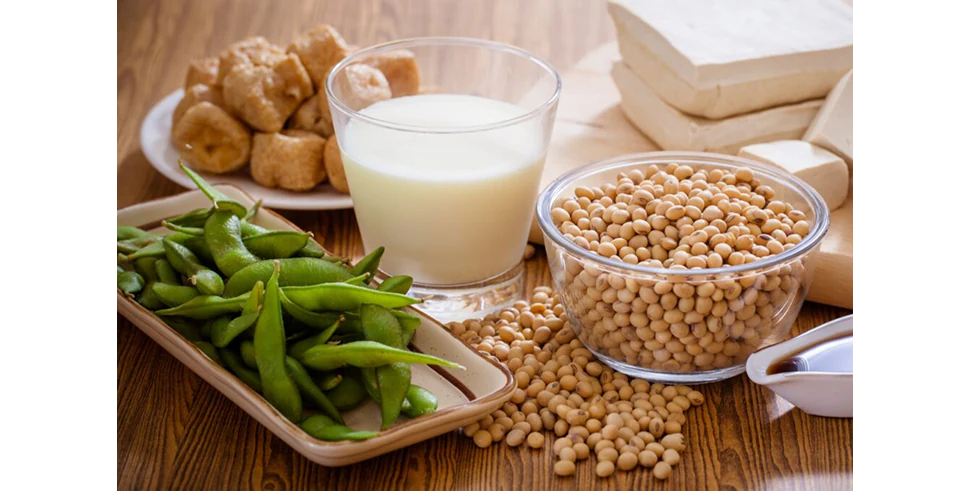
There is no single “menopause dose” of soy. If you tolerate it well, a practical approach is tofu or tempeh in a meal, edamame in a salad, unsweetened soya milk in a smoothie, or miso as part of a dish. You do not need soy at every meal, and if you dislike it or cannot tolerate it, a healthy menopause diet does not depend on it. Concentrated isoflavone supplements are a different matter and should not be taken automatically just because you are menopausal; whether one suits you depends on your symptoms, diet, medical history and medications, which is worth discussing with a registered dietitian or nutritionist.
Medical disclaimer
This article is for general information only and does not replace advice from a qualified healthcare professional. If you have questions about menopause symptoms, diet or supplements, speak to a qualified healthcare professional.
Sources
- NHS: Menopause
- British Dietetic Association: Menopause and diet
- Cancer Research UK: Diet and cancer (soy)
- Viscardi G et al. Soy isoflavones and estrogenicity: systematic review and meta-analysis of RCTs. Adv Nutr. 2025;16(1):100327
- Barańska A et al. The role of soy isoflavones in the prevention of bone loss in postmenopausal women: systematic review and meta-analysis of randomised controlled trials. J Clin Med. 2022;11(16):4676
- Boutas I et al. Soy isoflavones and breast cancer risk: a meta-analysis. In Vivo. 2022;36(2):556-562
Frequently asked questions
Not reliably. The evidence is mixed, and most reviews find no significant effect on hot flushes overall, though some women notice other symptoms ease.
Soy foods, usually yes; supplements, ask first. Moderate soy foods are not linked to higher risk, but discuss concentrated isoflavone supplements with your oncology team, especially on endocrine treatment.
One or two servings a day. For most women who tolerate it, that is a practical amount within a varied diet. There is no set menopause dose.
Foods, for most people. Whole soy foods also provide protein, fibre and minerals. Supplements deliver a very different dose and should not be taken without advice.
Your symptoms, medical history, diet and nutritional needs are unique, so your nutrition plan should be too. Book a Nutrition consultation at LIPS Healthcare, first floor, Turbine Hall B, Battersea Power Station. Visit our Nutrition Page.