
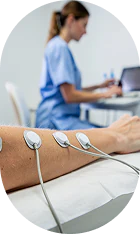

A little, for most people. The nerve conduction pulses feel like a brief tap or tingle, and the EMG needle feels like a pinprick. Any muscle ache afterwards usually settles within a day or two.
Nerve conduction test and EMG in London
A nerve conduction test and EMG check how well your nerves and muscles are working, helping to find the cause of numbness, tingling, weakness or nerve pain. At LIPS Healthcare, Battersea Power Station, both tests sit within our neurology service, so the specialist who reads your results can also plan what comes next.
No Referrals Required

Nerve conduction test and EMG in London
A nerve conduction test and EMG check how well your nerves and muscles are working, helping to find the cause of numbness, tingling, weakness or nerve pain. At LIPS Healthcare, Battersea Power Station, both tests sit within our neurology service, so the specialist who reads your results can also plan what comes next.
No Referrals Required
- Home
- Specialities
- Emg Nerve Conduction Test
What Does A Nerve Conduction Test Diagnose?
A nerve conduction test helps diagnose conditions that damage or squeeze the nerves, such as carpal tunnel syndrome, trapped nerves and peripheral neuropathy, and an EMG adds detail about the muscles those nerves control.
Testing can cover the hands and arms or the legs and feet, depending on where your symptoms are. Maybe tingling hands wake you at night in Clapham, or a numb foot is slowing your walk to work in Wandsworth. Either way, the aim is a clear answer and a plan.
Your neurologist may suggest testing to look for:
Carpal tunnel syndrome, often felt as tingling in the thumb and fingers at night
Ulnar nerve problems at the elbow, affecting the ring and little fingers
Peripheral neuropathy, including burning or nerve pain in the feet linked to diabetes
A trapped nerve in the back, such as lumbar radiculopathy or sciatica from the L5 nerve root
A compressed nerve in the neck, such as C6 nerve root compression causing shoulder and arm pain
Conditions that affect the muscles directly
What Happens During An EMG And Nerve Conduction Test?
An EMG and nerve conduction test usually takes 30 to 60 minutes, depending on how many nerves and muscles need checking, and you can go home straight afterwards.
Step 1
Skip moisturiser on the day, wear loose clothing and keep your hands and feet warm. Let us know if you take blood thinners or have a pacemaker.
Step 2
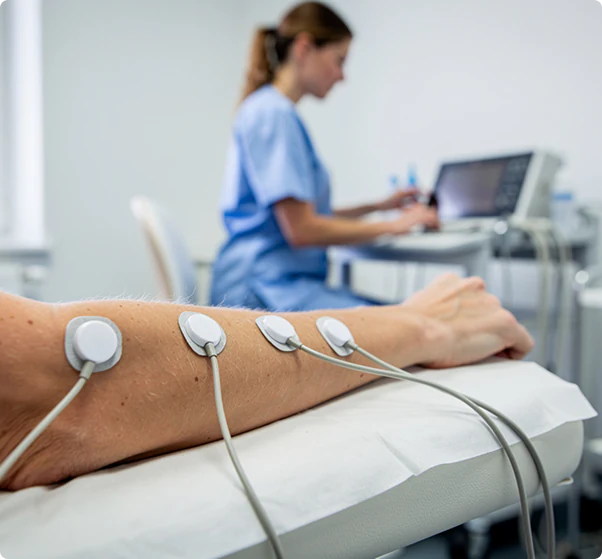
Small pads go on your skin and a quick pulse travels along the nerve. Most people describe it as a tap or a tingle.
Step 3
A very fine needle is placed into a few muscles while you relax and then gently tighten them. It can feel like a pinprick.
Step 4
You can usually drive and get on with your day. The tested muscles may ache or bruise a little for a day or two.

FAQs
Usually 30 to 60 minutes. It depends on how many nerves and muscles your neurologist needs to check. Allow a little extra time for your consultation and to talk through your results.
No. A nerve conduction test measures how signals travel along a nerve, while an EMG records electrical activity inside the muscle. They work best together and are usually done in the same appointment.
Usually just a few. One very fine needle is moved between a small number of muscles, chosen according to your symptoms. The nerve conduction part uses surface pads only, with no needles at all.
Yes. A nerve conduction study is one of the main ways to confirm carpal tunnel syndrome and show how badly the nerve at the wrist is affected, which helps your consultant choose the right treatment.
No. Multiple sclerosis affects the brain and spinal cord, which an EMG does not test directly. If your neurologist suspects MS, they will usually arrange an MRI scan instead.
No. Multiple sclerosis affects the brain and spinal cord, which an EMG does not test directly. If your neurologist suspects MS, they will usually arrange an MRI scan instead.
Something loose. Choose clothing that rolls up easily over your arms or legs, skip moisturiser on the day and keep warm. Tell us beforehand if you take blood thinners or have a pacemaker or other implanted device.
Yes, usually. There is no sedation, so most people drive home and carry on with their day. If a tested muscle feels sore, go easy on that arm or leg for the rest of the day.
Partly. Some findings can often be discussed on the day, with a full report to follow. Your neurologist will tell you when to expect it and what happens next.
No. You do not need a GP referral to see a LIPS neurologist, who can arrange your test. Referrals from your GP, physiotherapist or another consultant are also welcome.